
What is slop?
Can it only be AI-generated?

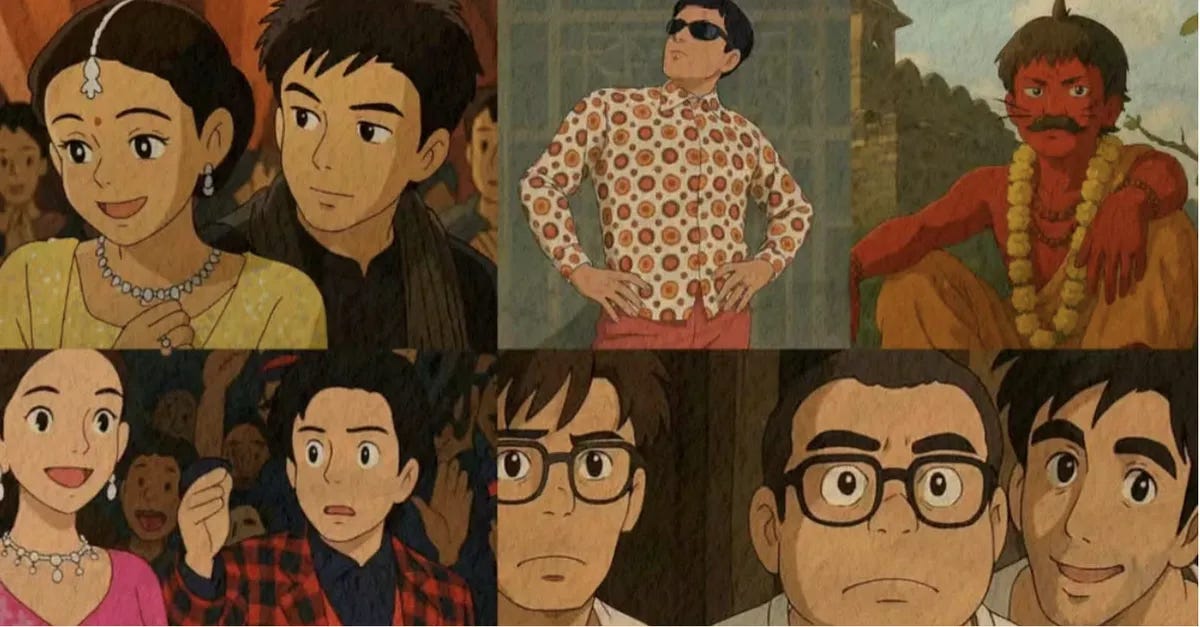
In case you didn't notice, it has already been more than a year since the very viral "Studio Ghibli" trend came out of ChatGPT's image-gen updates. It was something that the world had never seen before. Even Sam Altman, the CEO, was shocked to see such a response, to which he had to say this:

As someone who loved playing with (and jailbreaking) AI models since the GPT-3 days, I was pretty excited about generating Studio Ghibli images myself. Like many other thrifty Free users of ChatGPT, who’ll create 10 accounts but won’t pay for a single one of them, I remember being utterly disappointed. I couldn’t use any of the ten accounts to generate a single such image because there were too many people doing the same. Indian internet consumers are probably the second biggest reason why rate limits exist. The first? Their AI agents!
On the flip side, we had people who were angry about this trend, including the man behind Studio Ghibli itself — Hayao Miyazaki.
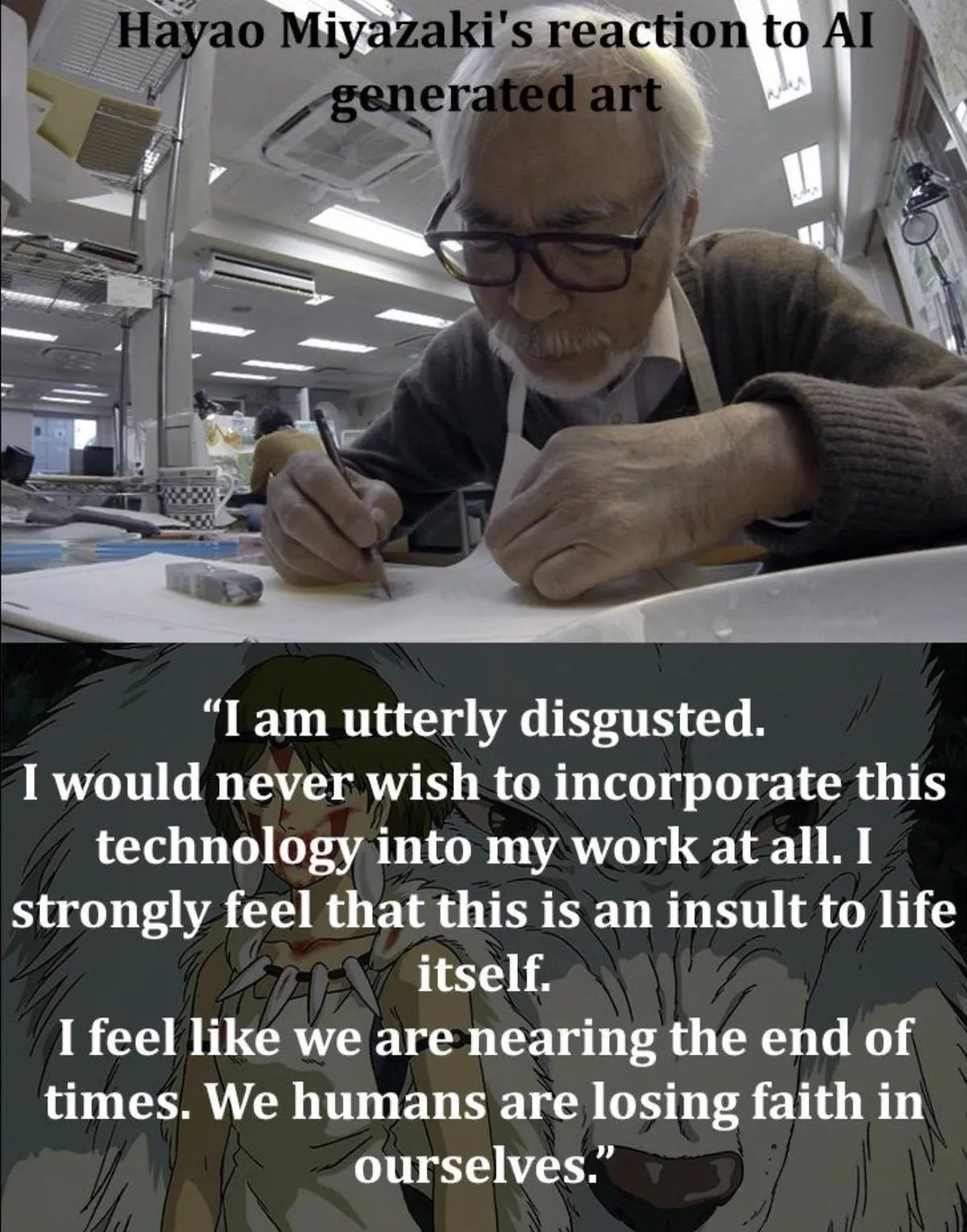
To them, this was clearly a breach of IP (which it was) and a stale attempt at copying something users didn’t really understand, and obviously something which was getting made all too conveniently. The slop factory was real and ChatGPT’s business was booming. Those on the other side of the ring put up lawsuits, conducted petitions and protests, and did everything they could to stop any further developments on Artificial Intelligence as a branch of study. A month ago, Molotov cocktails were thrown at Sam Altman’s home in the middle of the night. Telling that you work in tech attracts more side-eyes these days than phone numbers at house parties.
If you didn’t notice yet, everything on the web these days seems AI-generated. Which might not even be that far from the truth. A study from Ahrefs in March 2025 showed that 3 out of 4 webpages on the internet now have at least some AI-generated content. And this was before Claude Code was public and OpenClaw wasn’t really a concept! Imagine this ratio today.
However, there’s another angle to this debate, which plays to people’s inherently tribal brains.
Richard Nadler, a German artist, faced immediate backlash on his work as soon as people learned that he’s a “generative AI artist”. All of a sudden, the work which seemed so surreal and beautiful, became a bunch of crap and AI-generated fluff that people were not ready to engage with at all.
Anything these days created with the help of AI, even remotely so, is dismissed as slop without any further discussion.
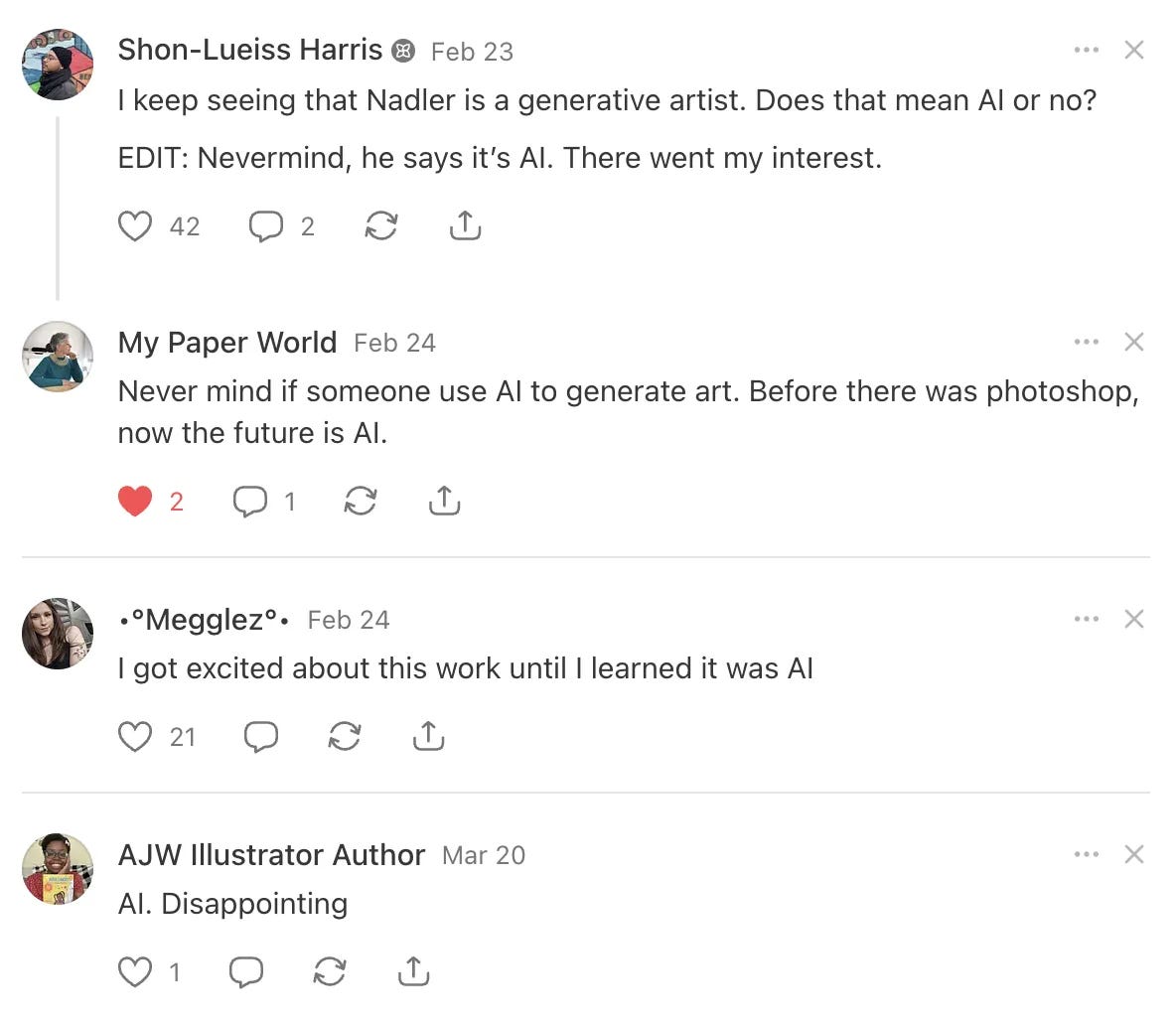
A sloppy and convenient statement hidden behind a guise of intellectualism, oh the irony! If AI is the culprit behind slop, and curtailing its use is what leads to “original ideas”, does it sound fair that no slop existed on the internet before ChatGPT existed?
Are you really sure about that?
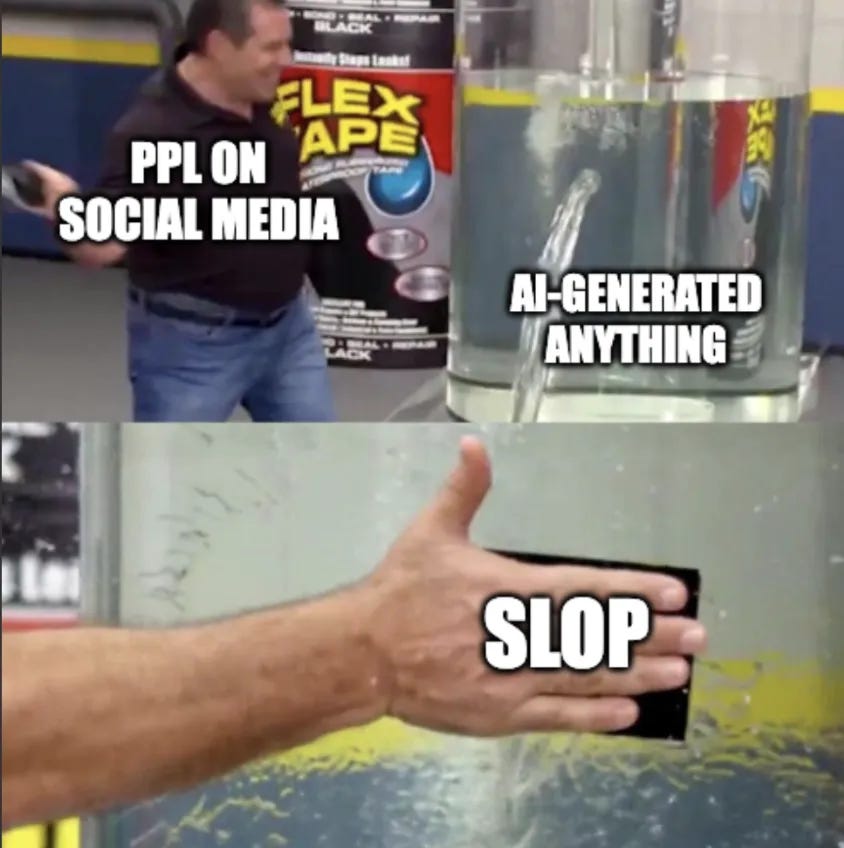
Let’s look at the definition of slop as per the Cambridge dictionary.
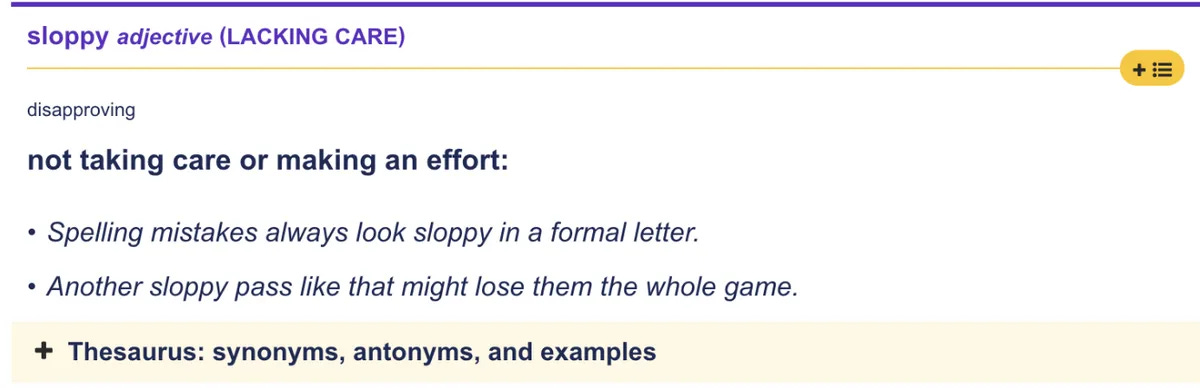
And mind you this has been a word which has been around well before AI was a buzzword. Although, the word’s been more in use recently for very obvious reasons.
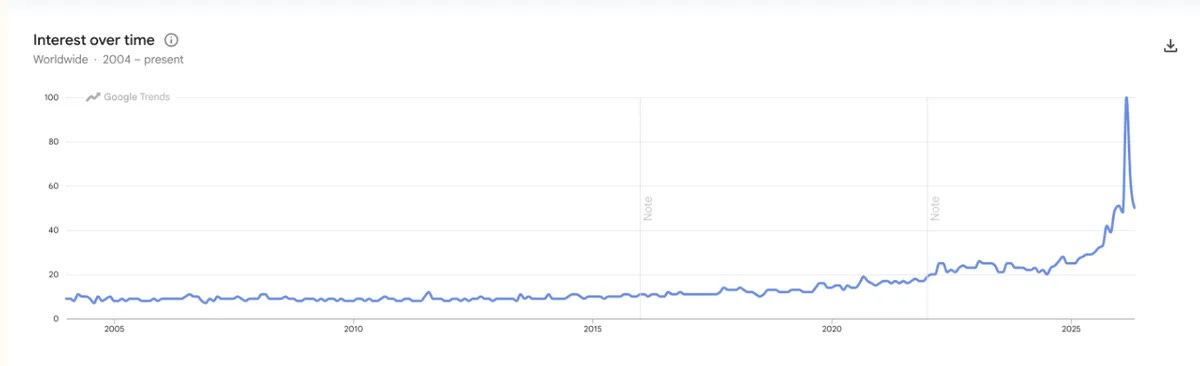
It’s safe to say that slop was indeed a thing before ChatGPT came out. The volume of production of slop, however, is accelerated a lot more as it becomes easy to make things which are based off some other thing that someone saw on the internet.
But what makes slop so sloppy?
In early 2025, my little brother Akshit also published his post on AI slop and how the absence of friction of creating something worthwhile robs it off its greatness. He’s inconsistent but he’s a far more entertaining writer than I could ever be. Check it out!

But the point he makes in his essay is essentially what I want to project. Which is: anything that hits like free dopamine but is born without the inherent struggle of being an artist, is what’s slop. What lacks effort, clearly shows lacking effort.
The nuance I’d like to add that is that sloppiness is not a debate of whether or not AI was used in the production of that artefact. It’s more to do with the level of attention given at the time of production, at the time of consumption and the real intent behind creating the said artefact (which is usually appeasing the algorithm gods).
It’s indeed true that AI models are getting better and sharper at following your direction — whatever and how noble it may be, and for very long periods of time. With some configuration they’re able to generate 1:1 clones of websites (nowadays even APIs) but they inherently lack a sense of direction.
It’s funny to say that it takes a hell lot of time to produce anything meaningful beyond the clone from AI. If you’re someone serious about your work, and you think you’re good at what you do, you’ll feel the urge of not involving AI into your work when you start out, or at least critiquing what AI has generated pretty harshly. That’s why it takes so long to get to the right answer with AI, a good one takes two sentences and a minute.
If you haven’t already noticed, all “knowledge work” is a byproduct of two aspects:
your ideas (original or inspired)
the mundane steps of getting there
Someone may argue that the mindless mundanity of bringing your ideas to life is “inefficient” and therefore should be weeded out. But sometimes these steps give you the necessary friction to keep at it and produce more original work. I still prefer sketching out first ideas on paper for my posts and designers still use Figma even if they can now code.
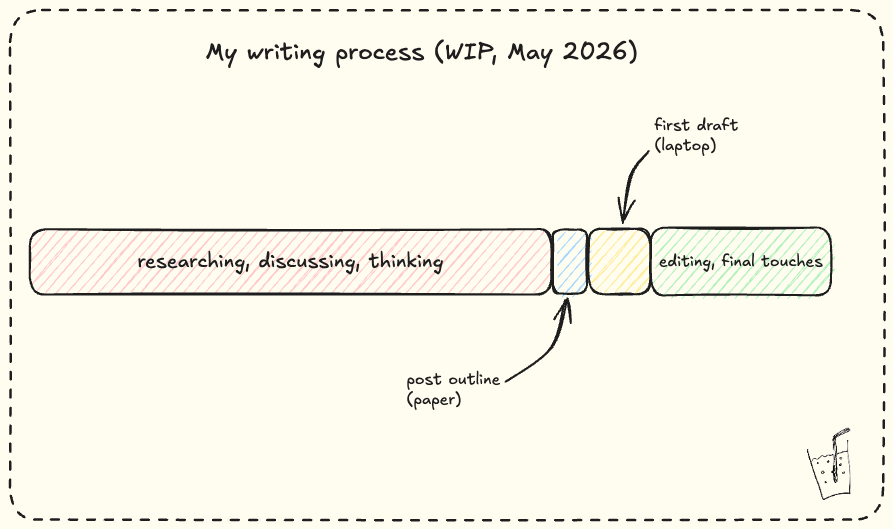
On the flipside, there are also some things that are notoriously mundane, such as writing boilerplate code for a Next.js app, wetting your canvas before you paint or sound checks on stage which can run upto several hours at a time. Sometimes your creative endeavour of getting to a place with your art is lost on you as a result of this “boring” process. As a result the floor of production is already so damn high that a lot of people with amazing app ideas may not build them, or the rapper with a beat in her head may never be able to get it out into the world.
That’s where AI is helping people. It’s helping them to at least get started, and get their production to a level that helps people be less embarrassed about their first drafts.
But is building things using AI akin to life on easy mode? I beg to differ.
Now that everyone’s able to build a solid v0 of their idea, it’s taking so much more from artists to raise the bar to a degree where AI can’t even judge them probably, let alone help them create. The ceiling is rising to abnormally high levels. New records, new apps, new visualizations — so much fun!
Artists like Nadler are embracing these new tools with open arms and are pushing the boundaries of what's possible in digital art. When asked about his process of creating his beautiful visualizations, here's what he had to say:
tl;dr
He starts from personal memories and hand-drawn sketches, then feeds them into a custom AI model he co-trained with a technical collaborator. He then iterates daily for months (new prompts, new reference images, fine-tuning), generating thousands of outputs through trial and error, before curating down to ~128 final pieces with help from platform curators.
You tell me — does that look like slop to you?
There was a time when electronic artists who relied on sampling from existing tracks and mixing over them, were considered indecent. Heck, I don’t have to go that far, even I thought that it was cheap and unoriginal to take an existing track and mix it up. When my friend introduced me to Kanye West, I scorned at his work (oh wow I so hate myself).
But then, he showed me a video of breaking down his sample, I was impressed. I also learned that Linkin Park were genius samplers, most notably, the intro from Faint was lifted and shifted from the James Bond franchise’s From Russia with Love. I was floored.
As someone who started exploring these tools for production, I was genuinely amazed and relieved that human creativity can breed anywhere if given enough space and the right constraints. The bar keeps getting higher.
Could we have seen Kanye without sampling? Could we have had Charlie Puth and Jacob Collier and Billie Eilish and FINNEAS producing banger albums from their bedrooms and winning Grammies? Could we have seen artists like Nadler sharing their beautiful work without AI? OF COURSE NOT.
My entire argument is - slop is sloppy just like water is wet. The models may get better at producing one-shot outputs, which just means that more people will be able to do the same. What you make on the first pass will almost always not stand out, which means that you’re at your baseline and there’s only one way to go. The tech always raises the floor but pushes the ceiling even higher.
The tools that you see around you: be it coding agents, design tools or research assistants are still pretty novel and are as bad as they’ll ever be. As the tech matures (which is going to at least take 5-10 years as we understand modalities and best human-computer interfaces for the new era), we’ll see new frontiers getting unlocked. We don’t even know what’s possible and what kind of advancements we’ll make in critical domains like medical research and nuclear physics.

But as of now, technology, as it has been all this while, the great equalizer. Love it or hate it, more people will now have access to do things which only experts could. That may mean that some “experts” will no longer be needed in places where they were needed before, but the bar for the top 10% in any field has gone up higher than ever. The experts who can argue about machine output confidently need more command on their craft, and the value on their craft has gone up by about a 100x of what it was before. The average man often doesn’t need their expert advice in a simple hobby project, but the man can aspire to get to a standard which is at least 50% of what his masters did. Which is all that matters.
Yes, the models always produced sloppy output until a while back. Will Smith wasn’t able to get his ramen into his mouth for quite a few years. But if you’ve been following the developments that Higgsfield AI have been making in film production, you’d need to lift your jaw up from the floor.
The entire deal is this: computers, for the first time in human history, killed the effort that it took to produce multiple copies of the same digital file by being able to replicate it for an infinite number of times, helping creators around the world build so much good stuff and still earn a living off it. The new tools at our disposal now make it easy to replicate ideas, workflows, constraints, and remix them into artefacts which look ever-so slightly different and more “customized” to a particular situation.
The ways of working you build give compounded returns. But the foundations are still the same: for you to be able to produce anything worth producing, you need to have the depth of knowledge in the domain you’re labelling yourself an expert. Being a “shallow master” will not cut it anymore.
The economic value still lies in the deterministic part in the production of anything AI generated. Models in of themselves are quickly becoming a commodity. That’s also the reason why we see OpenAI and Anthropic rushing to grab businesses by first starting with Forward-Deployed Engineers and now moving to full-blown services. Are they trying to be the new TCS?
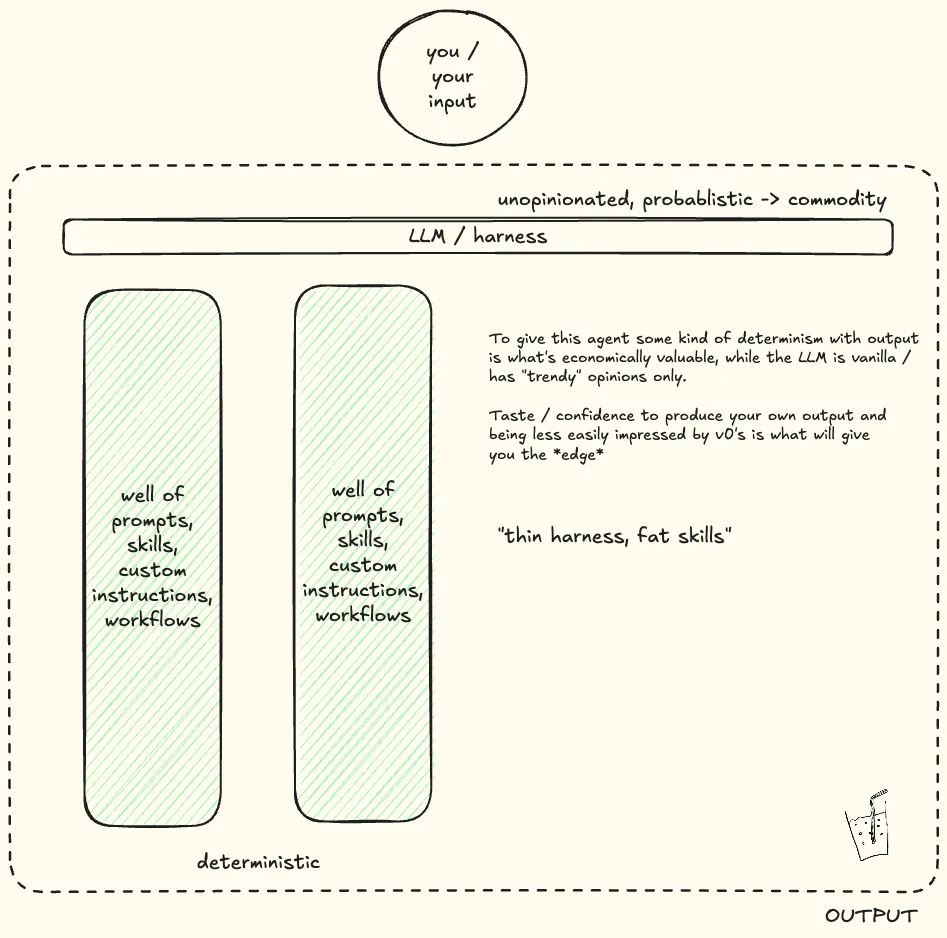
As for slop production, yes, that’s still a problem. But that’s more because our existing social media paradigms are not attuned to the new reality of someone being able to “crack the algorithm” once and then repeating it a thousand times for financial gains.
The playbook to going viral is now contained in a cron job. Use the same template that has made you successful and publish posts on a schedule. Not bad for someone who’d like to be famous on the internet, no? The rules for engagement-baiting as defined by social media platforms are the very incentive behind the generation of slop. If slop wasn’t commerically successful, we wouldn’t have seen any of it, even before AI was around in its current shape and form.
To wrap it all up, and I’ll say it again: slop is a problem. It always has been. But to make AI the culprit instead of questioning why people would be interesting in generating slop in the first place (in the hopes of pleasing yet another AI overlord) is where we lose the plot.
We’ve already started putting AI to good use in medicine, research and helping people who were limited by their skill in web development to build cool apps. Yes, v0 has become easier to manufacture but it’s just that: the first cut. Good if you’re happy with it. But getting to a level where you can produce marvels from the new technology takes as much time, if not more.
With that said...
Cheers,
Samyak
Note: AI was only used for research on this post. I intend to keep it that way, idk for how long…
I like this take because it's not black and white. I feel AI is just a speedboost to slop that would have already existed - it's just 10x in volume but slop is just an output of sloppy thinking - AI's just the multiplier
1. Sturgeon's Law: 95% of everything is crap. 95% of all content on the internet before AI was crap, and will be so in the post AI world as well.
2. On the constraints and struggle of an artist part: Manu Joseph had a very good article in the Mint recently about why AI can't write good comedy-- because it trains itself only on the final outputs of other comedians, it does NOT have access to the discarded drafts which have a pivotal role in the final output. And the real magic is woven in those discarded drafts. In fact, as per Manu, AI is poor at replicating the prose of great authors. Even the ones whose prose is relatively easier to replicate, like PG Wodehouse. Struggling with the constraints is a part of the process which shapes art, and bereft of it you will mostly get slop.
3. There is a general tendency to glorify 'original' work, and a certain villification of derivative one-- and I think that's part of the reason why AI-based art is criticised. And I'd argue that 'original' work can be garbage(as it is in Economics these days), and derivative work can be fantastic. Good artists copy, great artists steal. The Dhurandhar Playlist is an example.
https://substack.com/@mrdulpandita/note/c-259675741?r=4db9i0&utm_source=notes-share-action&utm_medium=web