
Remote work #1
why not then?

Hi there!
I’ve been trying to keep my writing schedule as tight as possible. It’s not been easy, with something like two-and-a-half jobs worth of meetings, docs, and deadlines up my sleeve, but hey, who wants to do the easy stuff anyway?
Today, I want to talk about something I’ve had the privilege(?) of experiencing as much as anyone could. I’ve had a love-hate relationship with remote work. As for how and why — I’m here to tell you all about it!
This is not a single post but a series of three posts. This is broken down into
Why not then?
Why now?
How about tomorrow?
I mean, it could’ve been a single post too, but I also know that your attention span sucks. So, you’re welcome!
Today, we will talk about what made remote work infeasible yesterday and a possibility today.
Let’s start!
Work From Anywhere has been a concept that many science-fiction books (and even cartoons) fantasised about a great deal.
We are most affected by ideas we are fed as children, which we grow to idealise and bring to real life.
Our generation was inspired not only by what was going on around them but also through our consumption of TV, books, YouTube videos, and other such media. So, attending school remotely was something I had dreamt of doing after watching Doraemon.
In one episode, Suneo talks about how, in the near future, he could attend his classes through a TV screen right next to his bathtub. He would never be late for class that way, especially during winter. The idea seemed very cosy to me as I watched the cartoon with my brother, eating piping hot dal chawal in the chilly Delhi winters when the last thing that I wanted to do was go to school.
Suneo also revealed his ulterior motive for attending these classes remotely in the episode. Not being physically present for a class would’ve meant he could use a few extra minutes to sleep more (or not need to wake up at all properly) and not bother himself with the harsh winter outside of his home. He’s shown to enjoy his classes sipping juice from his bathtub.

What we thought would be a product of 22nd-century technology made its way into our lives a bit too early. During the COVID-19 pandemic, almost all of us started working remotely in some way. This also went on to show that remote work had at least been feasible for a few years before the pandemic started and forced everyone to comply.
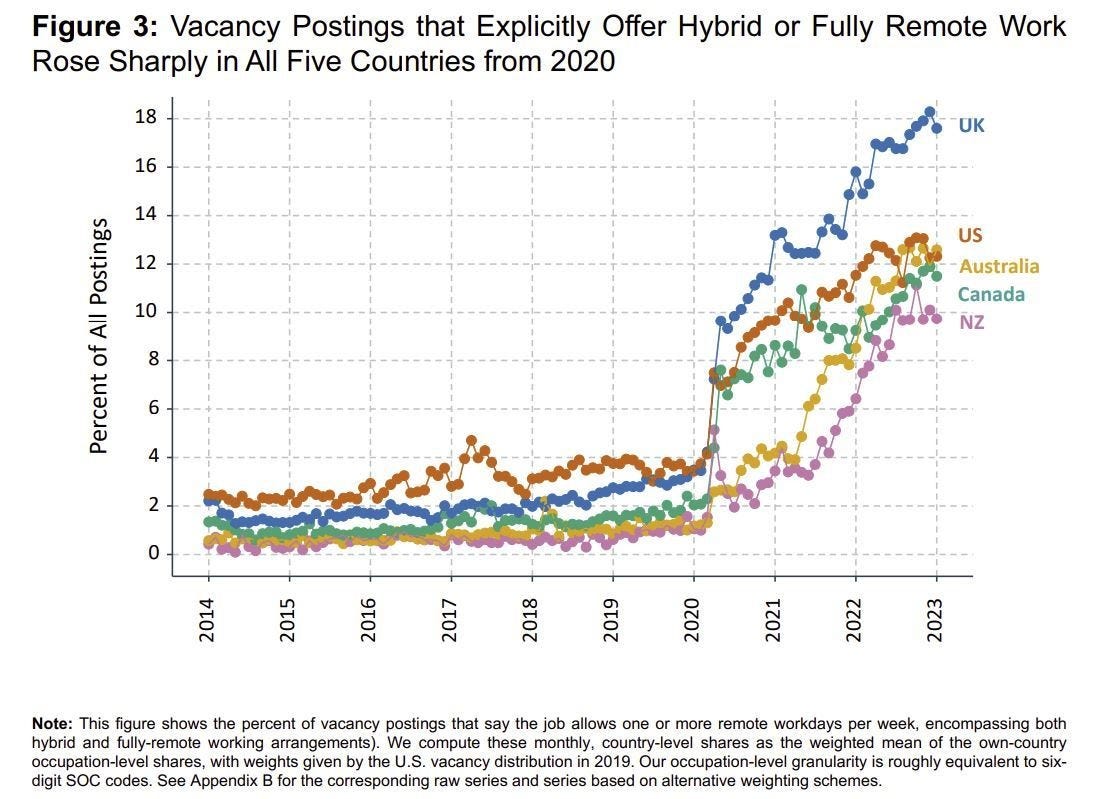
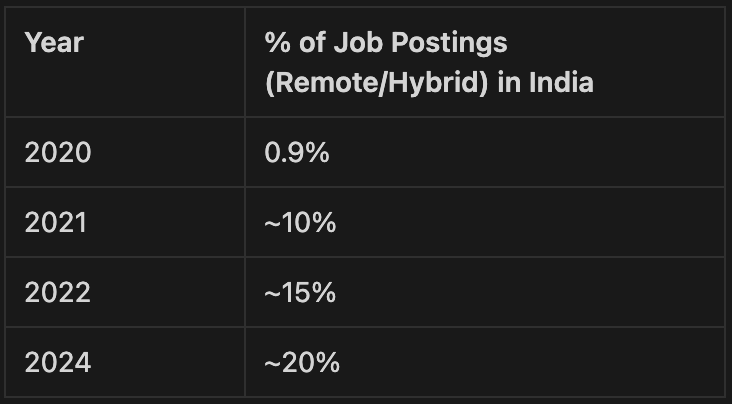
The trend in India has only been more extreme.
But where did it all start? Let’s dive deeper.
We see an influx of people from villages to cities sometime during the late 17th century, in the wake of the Industrial Revolution. It made sense for people to move where they could earn more, especially when new manufacturing and textile hubs were popping up in major cities.
It’s kinda funny to think that there would’ve been a time in history when village life was considered uncool and dull, and going to work in the factory would’ve been the “dream” of a few schoolboys back in the day. The grass is always greener on the other side, isn’t it?
As the demand for goods produced by these industries increased, so did the industries themselves. That meant that more people were hired and brought in from villages. More room was needed to accommodate more people, and that’s how new cities were built, and the old ones expanded.
Cities in India developed until the 18th century were built without a very tight concept of zoning, or followed “mixed zoning”, as we call it today. This meant that commercial spaces, industries and residential areas were built close to each other so that people could conveniently walk to work or use a cycle or slowly-moving public transport like trams. Just let it sprawl!
People initially tried living as close to the city centre1 as possible, purely because of convenience. Those who lived there were able to win at life and work, and eventually, these were the areas that became the most expensive because of heightened demand and fixed supply. People who wanted to retire from the bustle from the city life and to rejuvenate went back to the outskirts where life was calm and the prices were low.
It’s also amusing that areas like Vasant Kunj in Delhi, Powai in Mumbai, Marathahalli in Bangalore or Gomti Nagar in Lucknow were once called “city outskirts”. But that’s how urbanisation goes — cities expand, and what was once unknown, now becomes hot property.
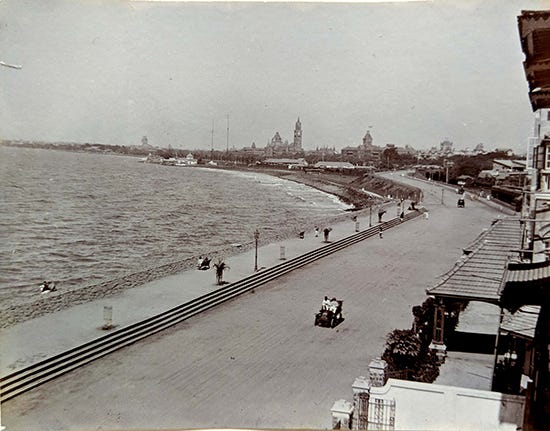
There’s also something interesting that happened in the 20th century. Cars were now also accessible to the commons, and many cities developed keeping the “future” in mind: a future full of cars and bikes and buses, which would reduce the distance between point A and point B. This would allow people to live a little far away as well at affordable places, and drive to work instead of walk to go there.
All this was okay up till a certain point. Detroit and Chicago models were applied throughout cities in the world. La Courbusier was the MVP then, and areas like Chandigarh, Delhi Cantonment were built under his supervision.
Who wants to walk if they can run… I mean, run their cars and bikes?!
But too much everything good is also a bad thing.
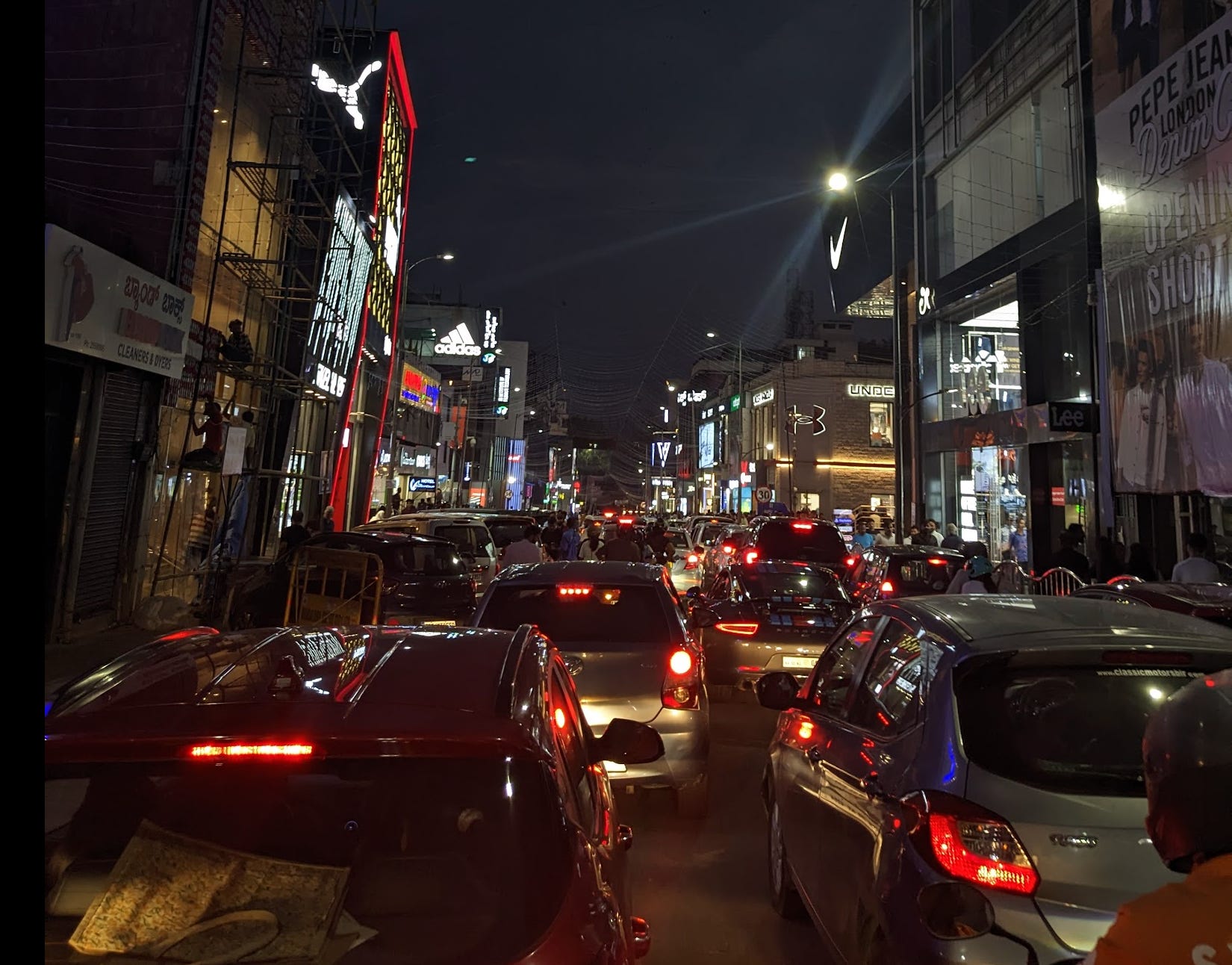
We know how this ends, don’t we? Lines upon lines of cars arranged like ants on long, winding roads that are barely walkable, barely breathable. The new-age countries (like most of the Global South) that adopted this model of development late were the most affected by it.
People started spending several hours per day just traveling to and from the office. Those who could (barely) afford a home close to their workspace had to pay extra rent—way more than what they’d pay when they stayed away from the city centre.
On the other side of the world, back in the 1960s, the US Department of Defense figured out a way for computers to talk to one another, which led to ARPANET and then the Internet. It would finally be possible for computer users to do computer stuff from far away.
Fast-forward to the 2020s. Mobile internet speeds are good for video calls and 4K video streaming. Multiplayer collaborative tools like Figma and even the OG Google Docs allow different people to work on the same file, without users needing to have the file on their local machines.
And sometime in the 2010s, a few software engineers, whose jobs relied almost entirely on coding and communicating primarily through text, were the first to adopt what we now know as remote work. They built tools that allowed others to live the life they were living, while these engineers were able to profit off it. Win-win, I guess?
So, (1) not being able to live near a city purely because of ₹₹₹ and (2) a convenient way that allows you to stay far and yet get shit done incentivised people to work remotely.
If commute times weren’t too long and if most people still walked to work, it was unlikely that remote work would’ve picked up pace. Also, if we didn’t have what we now call as multiplayer tools such as Office 365 products, Slack, Zoom, Loom, Jira, Confluence <inserts 10 other Atlassian products>, we wouldn’t have been nearly as excited about working from home anyway.
The next edition would be more personal and zoomed in — how these multiplayer tools do the things they do and what has been my experience as a remote worker — would be covered in the next episode of this series.
Till then,
Breathe!2
Your monthly(?) dose of place trivia: Speaking of offices, probably the coolest office building imo is The Statesman House in near CP, New Delhi. I mean just look at it! No matter what kind of architecture you’re into, you’ll have to agree that the building’s design is kinda iconic.
I really wanted to have a nice sign-off line, but most cool ones were already taken. “Breathe!” is what I used on my first personal blog and is kinda thoughtful, so yeah… 😬